
A Literary Journey Through Jane Austen’s England
July 26, 2026
Exploring the homes, landscapes, and historic estates that inspired one of literature’s most beloved authors
There are some trips that you enjoy, and then there are trips that feel as though you’ve stepped inside the pages of a favorite novel.
As someone who has loved Jane Austen’s novels for years, visiting the places that shaped her life—and the landscapes that inspired her stories—felt like following in the footsteps of one of literature’s greatest authors. From the quiet village where she wrote her masterpieces to the grand estates that inspired generations of readers and filmmakers, every stop offered another glimpse into the world behind Pride and Prejudice, Sense and Sensibility, Emma, and her other beloved novels.
Here are the Jane Austen sites that made this literary pilgrimage unforgettable.
Jane Austen’s House – Chawton
If there is one place every Austen admirer should visit, it is Jane Austen’s House in the peaceful village of Chawton.
This modest seventeenth-century cottage became Jane’s home in 1809 when her brother, Edward Austen Knight, offered it to Jane, her mother, and her sister Cassandra after years of financial uncertainty following the death of Jane’s father. Although simple in appearance, the cottage would become the place where Jane found the stability and quiet she needed to devote herself to writing.
The move to Chawton marked the beginning of the most productive period of her literary career. Here, Jane revised Sense and Sensibility, Pride and Prejudice, and Northanger Abbey, while writing Mansfield Park, Emma, and Persuasion. It was within these walls that the novels which have captivated readers for more than two centuries took their final form.
Walking through the house feels remarkably intimate. Unlike many grand historic homes, Jane Austen’s House remains warm and personal, offering a glimpse into the everyday life of the Austen family. Many of the rooms have been carefully restored with original furniture, family possessions, letters, and treasured artifacts that belonged to Jane and her relatives.
Many of the furnishings belonged to the Austen family, and you can stand beside the tiny twelve-sided writing table where Jane quietly created some of the most beloved novels ever written.
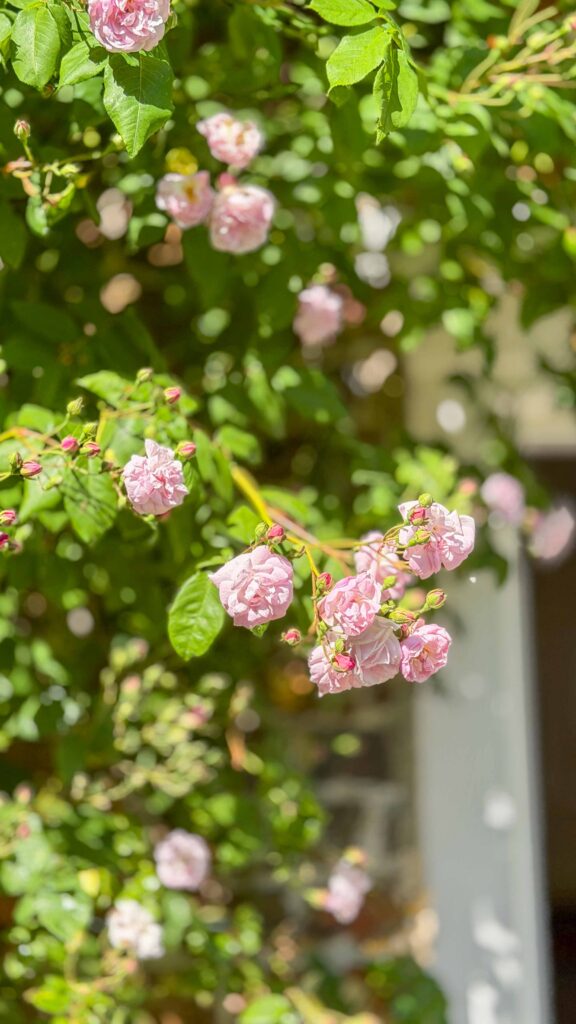
One of my favorite parts of the property was the garden. Filled with traditional English flowers and heritage plants, it’s easy to imagine Jane taking peaceful walks here while considering her next chapter. The surrounding countryside is every bit as idyllic as you would hope.
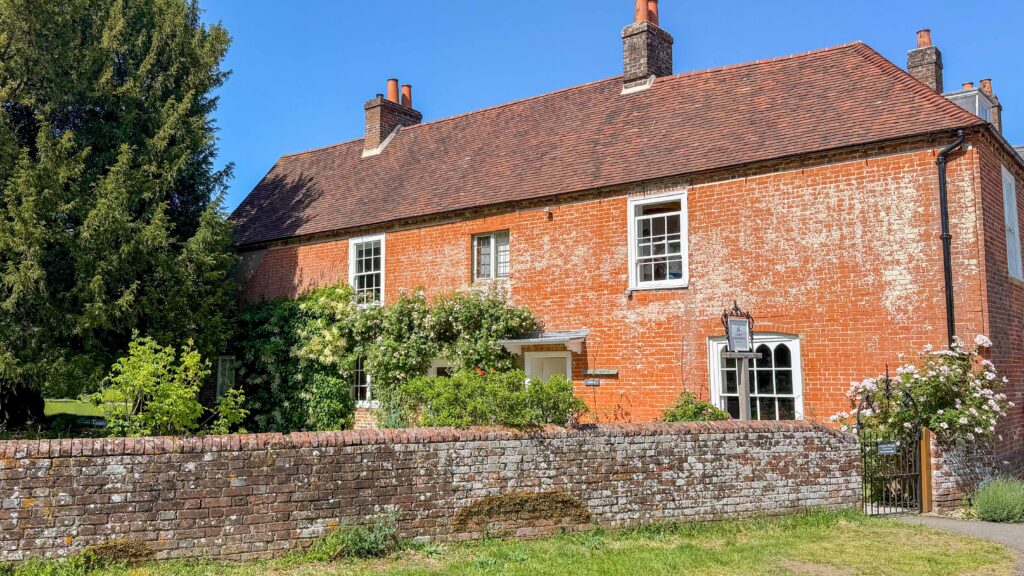
One of my favorite parts of the property was the garden. Filled with traditional English flowers and heritage plants, it’s easy to imagine Jane taking peaceful walks here while considering her next chapter. The surrounding countryside is every bit as idyllic as you would hope.


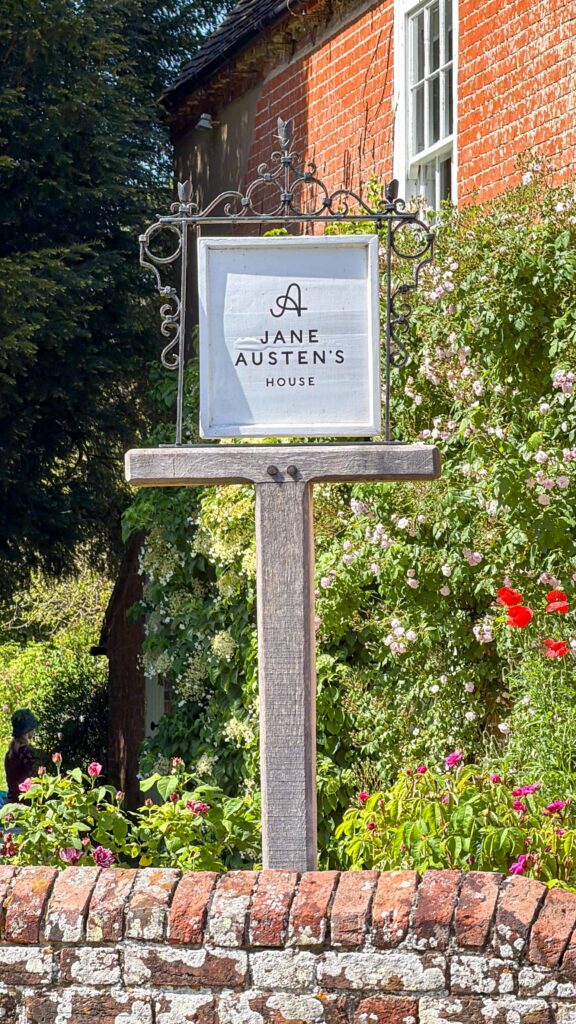




One of the most fascinating exhibits during my visit explored the wallpapers that would have surrounded Jane Austen throughout her life. The museum features beautifully recreated examples based on surviving fragments and period designs, including patterns such as Chawton Vine, Chawton Leaf, and Apprentice Ribbon. These wallpapers demonstrate the elegance of early nineteenth-century English interiors, where hand-printed papers added color and sophistication to even modest homes.


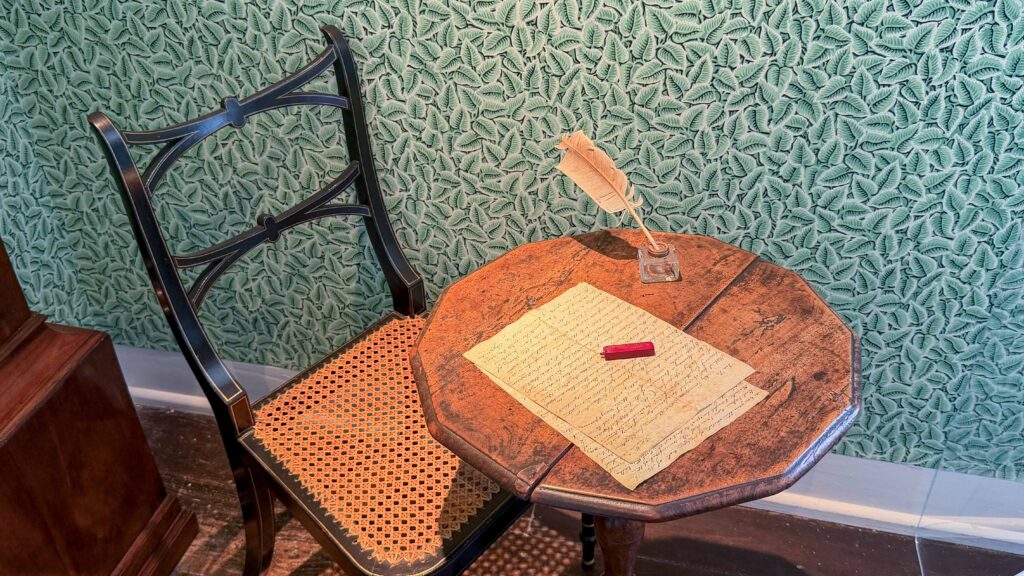
One of the home’s greatest treasures is Jane’s small twelve-sided walnut writing table, where she composed and revised many of her novels.
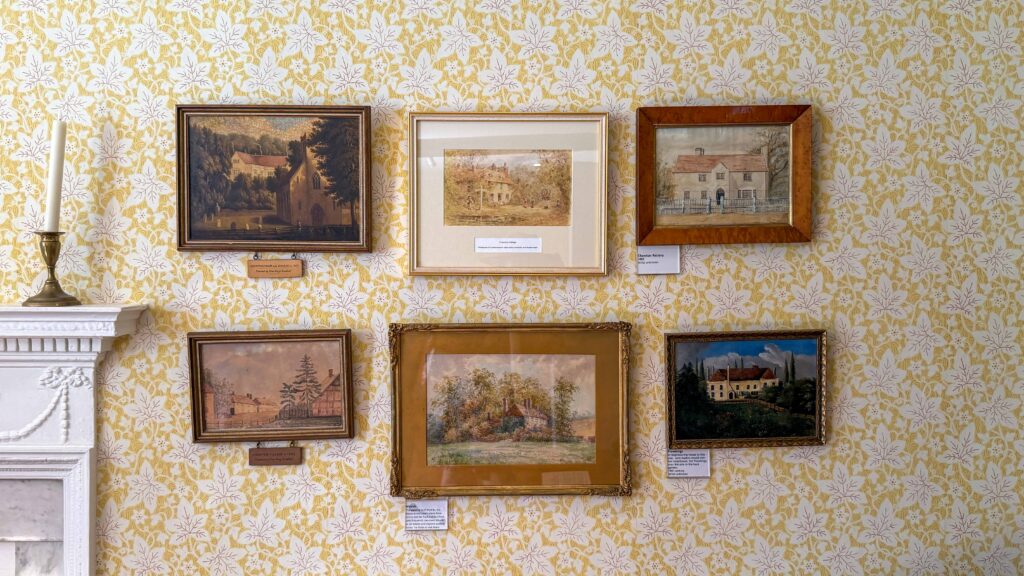



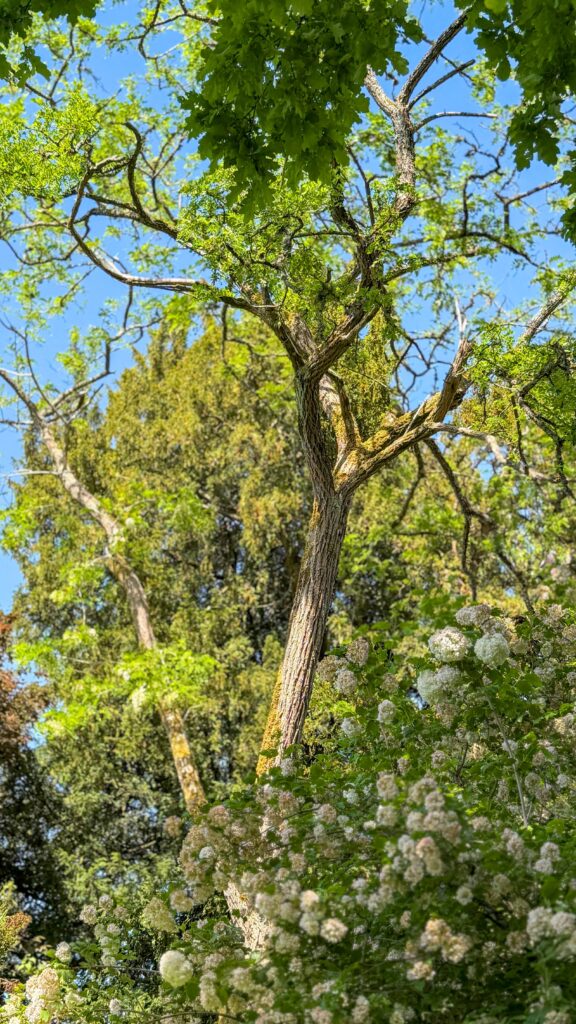
Stepping outside, the cottage garden is every bit as enchanting as the house itself. Carefully planted with heritage roses, seasonal flowers, herbs, and fruit trees that reflect what Jane would have known, it offers a peaceful place to wander and imagine her taking daily walks or finding inspiration among the blooms. There is even a tree that still stands that Jane planted herself.


Location
Winchester Road, Chawton, Hampshire GU34 1SD, England
Website: https://janeaustens.house/?utm_source=chatgpt.com
Typical Opening Hours
- Daily: 10:00 a.m.–5:00 p.m.
- Last admission is usually one hour before closing.
- Hours vary seasonally, so always check the website before visiting.
Don’t Miss
- Jane’s original writing table
- The family quilt
- Jane’s jewelry collection
- Original first editions and manuscripts
- The beautiful cottage garden
Allow
2–3 hours
Travel Tips
- Purchase timed tickets in advance, especially during spring, summer and during Jane Austen related events.
- Arrive early in the day for the quietest experience and the best photography.
- Allow plenty of time to explore the cottage garden—it’s just as charming as the house itself.
- Don’t rush through the gift shop. It has one of the best collections of Jane Austen books, stationery, and unique literary gifts.
Godmersham Park
Few people realize that one of the most influential places in Jane Austen’s life wasn’t actually her own home.
Godmersham Park belonged to Jane’s brother, Edward Austen Knight, who was adopted into one of Kent’s wealthiest families and inherited this magnificent estate.
Jane visited often, sometimes staying for months at a time. During those visits she experienced the elegant country house lifestyle that appears throughout her novels.


Walking along the famous lime tree avenue toward the house was one of my favorite moments of the trip. The scale of the estate is breathtaking, and it’s easy to understand how this magnificent estate influenced the grand country homes that appear throughout Austen’s novels.
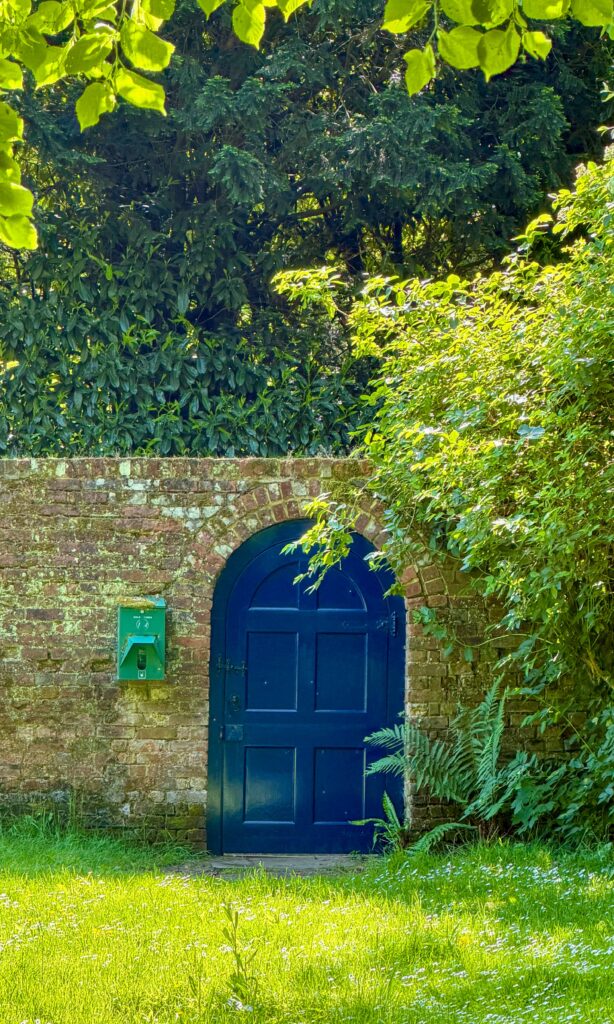




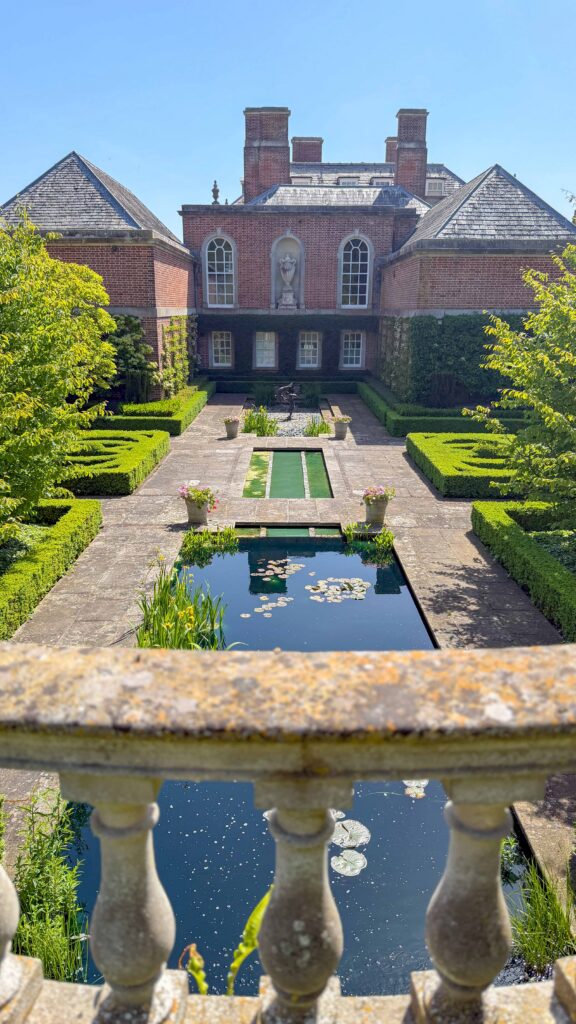
Nearby is St. Lawrence the Martyr Church, where generations of the Knight family worshipped and where Jane herself attended services while visiting. Standing inside this ancient church, with parts dating back nearly a thousand years, felt like stepping directly into Austen’s world.

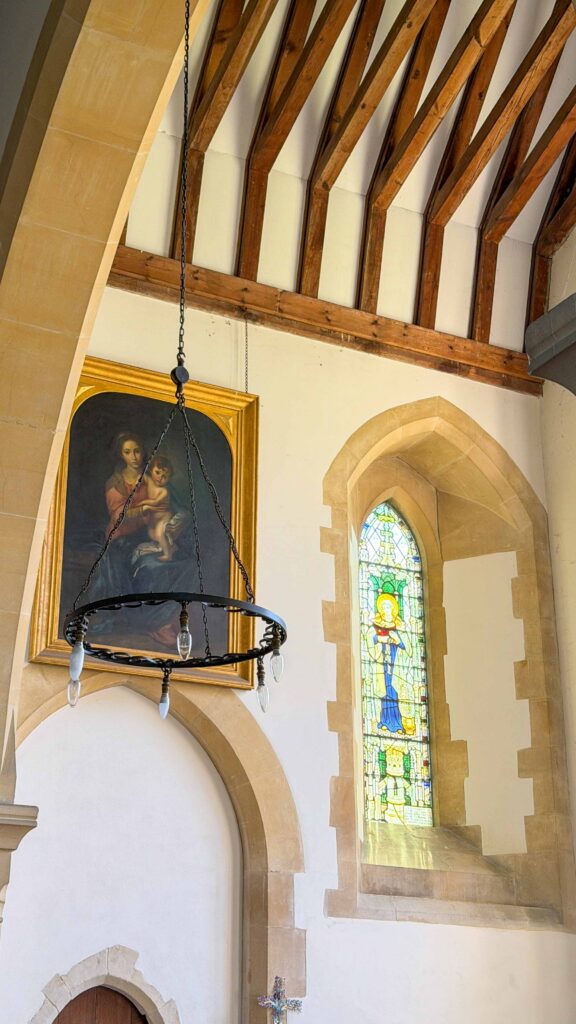




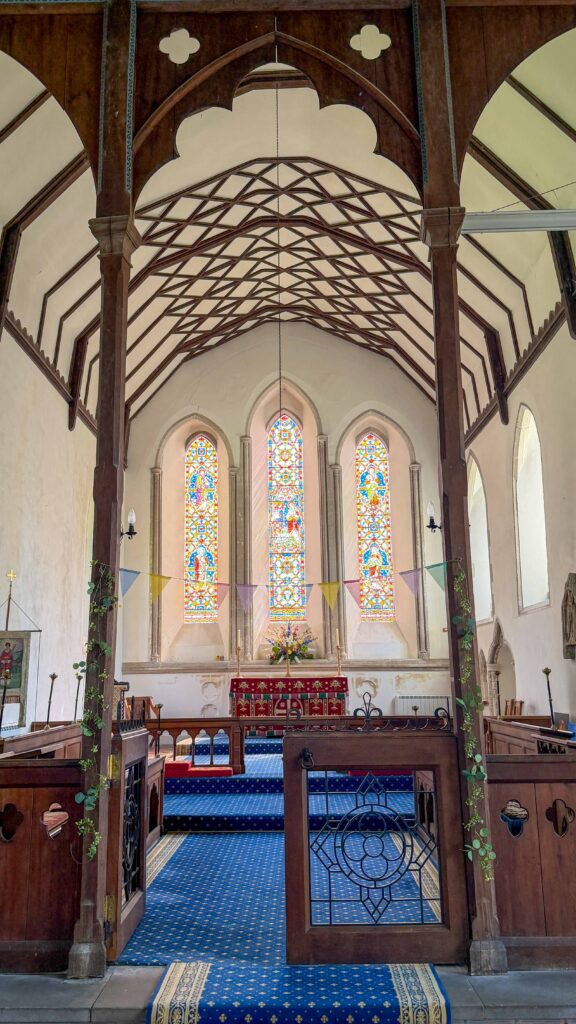

Location
Near Canterbury, Kent, England
Suggested Visit
1–2 hours
Travel Tips
- Be sure to confirm public access before planning your visit, as the house itself is privately owned and access is limited.
- Walk the famous lime tree avenue—it’s one of the most memorable experiences on the estate.
- Visit St. Lawrence the Martyr Church while you’re there. Jane worshipped here during her stays with her brother’s family.
- Consider combining your visit with nearby Canterbury or Chilham for a full day in Kent.
Bath
Bath is inseparable from Jane Austen’s story.
Although she lived here for only a few years, the city left a lasting impression on her life and later became the setting for both Northanger Abbey and Persuasion.
Walking through Bath today feels remarkably similar to how Jane would have experienced it. The elegant Georgian architecture, sweeping crescents, assembly rooms, and graceful streets still define the city.
One of my favorite experiences was simply wandering through the city, imagining the fashionable society Jane both observed and gently satirized. Everywhere you look, it’s easy to picture her characters strolling through the streets or attending elegant social gatherings.
It is one of England’s most beautiful cities and an essential stop for every Austen fan.








Location
Bath, Somerset, England
Website: https://www.visitbath.co.uk/?utm_source=chatgpt.com
Don’t Miss
- Royal Crescent
- The Circus
- Pulteney Bridge
- The Roman Baths
- The Pump Room
- The Georgian streets featured in many period films
Travel Tips
- Plan to stay at least two days. Bath deserves much more than a quick day trip.
- The city is best explored on foot, so wear comfortable walking shoes.
- Visit early in the morning or later in the evening to enjoy the quieter streets.
- Make reservations in advance if you plan to have afternoon tea at one of Bath’s historic tea rooms.
- Leave time to wander beyond the major attractions—some of Bath’s prettiest streets are the ones you discover by accident.
- If you’re interested in Regency history, check local schedules for walking tours or special events.
- Don’t over-plan Bath. Some of my favorite memories came from wandering the elegant Georgian streets and imagining Jane Austen’s characters doing the very same.
Chatsworth House
Although Jane Austen never mentioned Chatsworth House by name, many literary scholars believe it inspired her description of Pemberley, the magnificent estate belonging to Mr. Darcy in Pride and Prejudice.
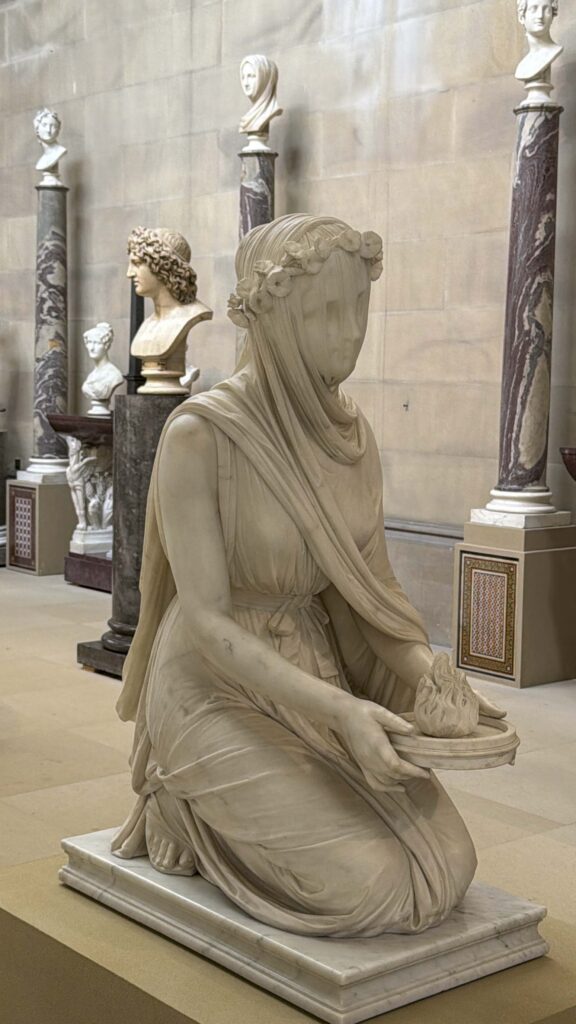
The connection became even more famous when Chatsworth was featured as Pemberley in the 2005 film adaptation starring Keira Knightley and Matthew Macfadyen. Several memorable scenes were filmed here, including Elizabeth Bennet’s first visit to the estate and the gallery filled with sculptures, where she unexpectedly encounters Mr. Darcy.
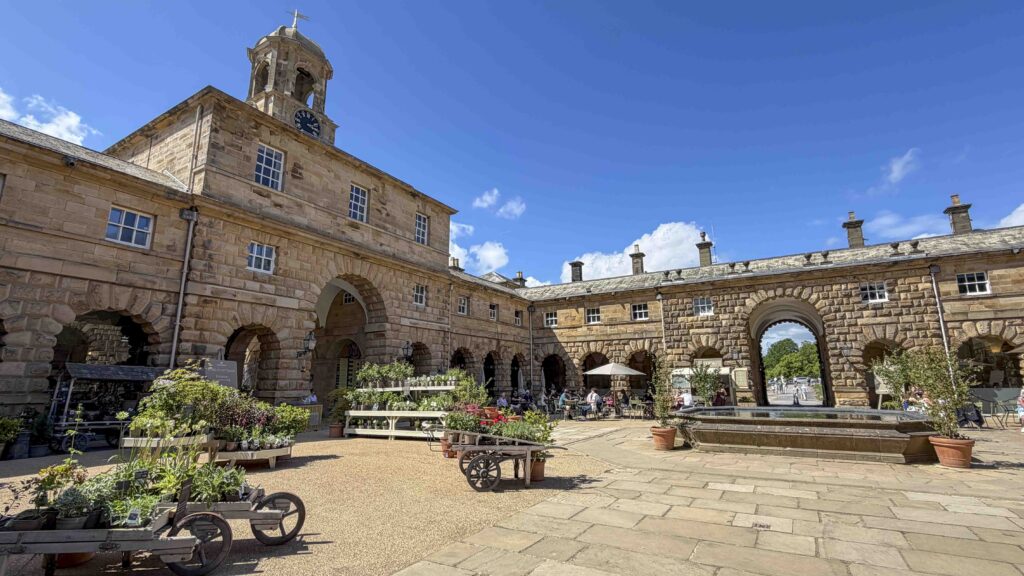
Walking through the house and gardens, it’s easy to understand why so many believe this was Austen’s inspiration. The elegant interiors, priceless art collection, sweeping staircases, and breathtaking parkland create exactly the sort of grandeur readers imagine when they think of Pemberley.
Whether or not it was Jane’s original inspiration, Chatsworth perfectly captures the beauty, refinement, and quiet dignity that make Pemberley one of literature’s most beloved fictional homes.

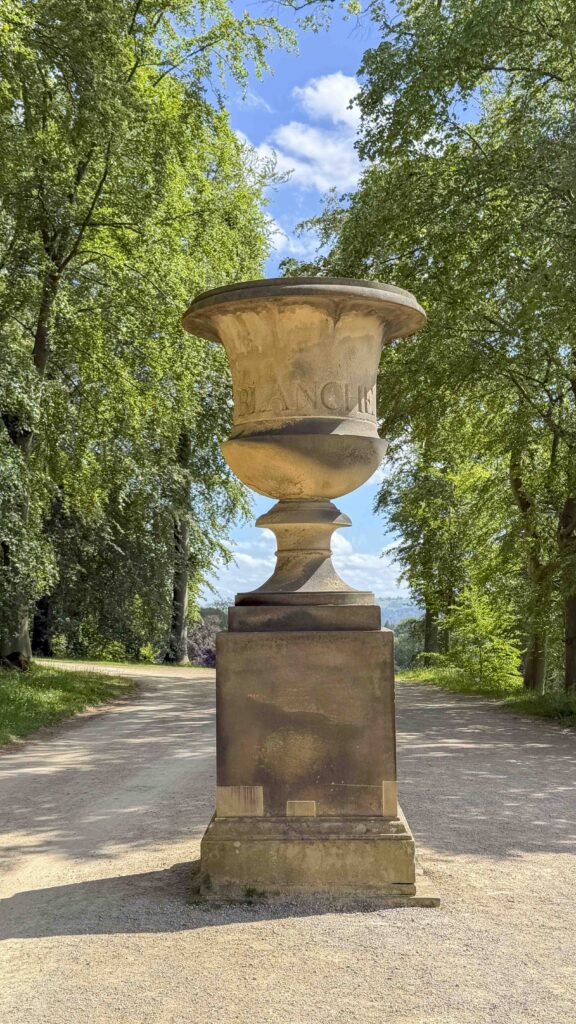







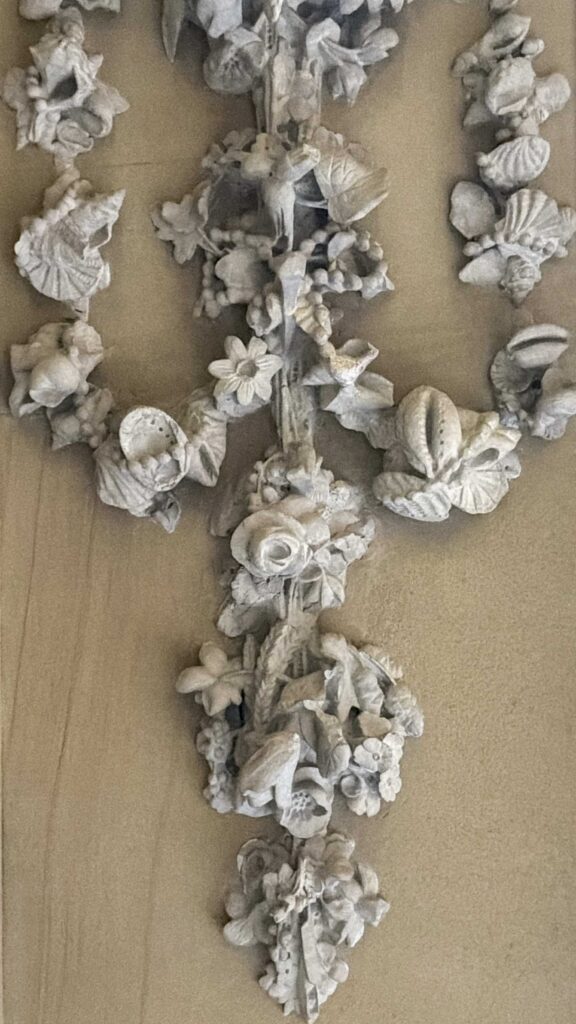




Location
Bakewell, Derbyshire DE45 1PP, England
Website: https://www.chatsworth.org/?utm_source=chatgpt.com
Typical Opening Hours
Opening times vary by season, but the house, gardens, farmyard, and shops generally open between 10:00 and 11:00 a.m.with afternoon closing times. Check the official website before your visit.
Suggested Visit
A full day
Reservations
Strongly recommended during spring, summer, and holidays.
Parking
Large paid parking areas are available on the estate.
Don’t Miss
- Sculpture Gallery
- Painted Hall
- State Apartments
- Cascade
- Emperor Fountain
- Rock Garden
- Orangery Gift Shop
- Farm Shop
Travel Tips
- Arrive when the estate opens to enjoy the house before it becomes crowded.
- Wear comfortable shoes—the gardens are much larger than many visitors expect.
- If you’re a Pride and Prejudice fan, don’t miss the Sculpture Gallery, where Elizabeth Bennet first encounters Mr. Darcy in the 2005 film.
- Visit the Orangery and Farm gift shops before leaving—both are destinations in their own right.
Stourhead
No literary journey would feel complete without visiting Stourhead.
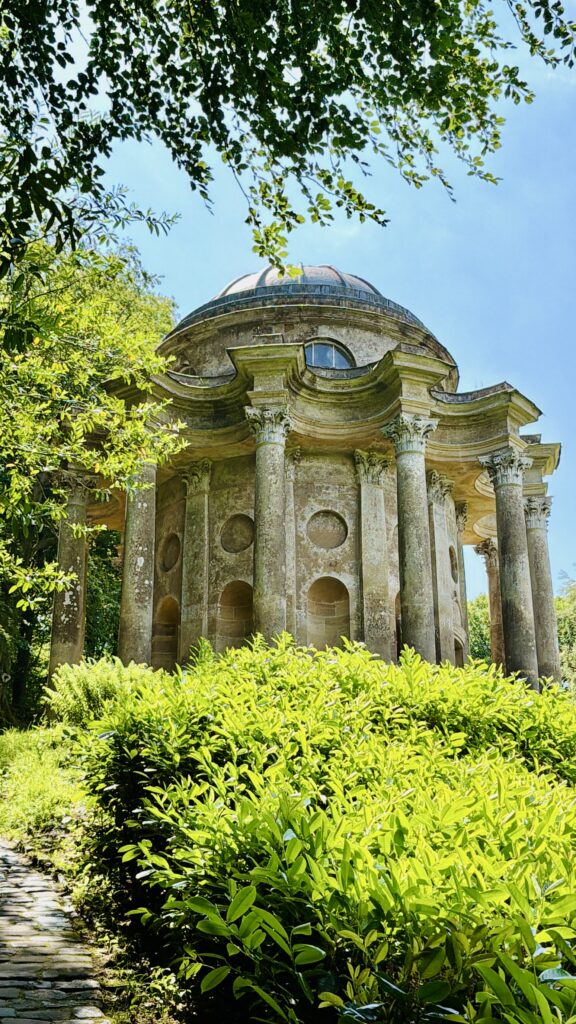
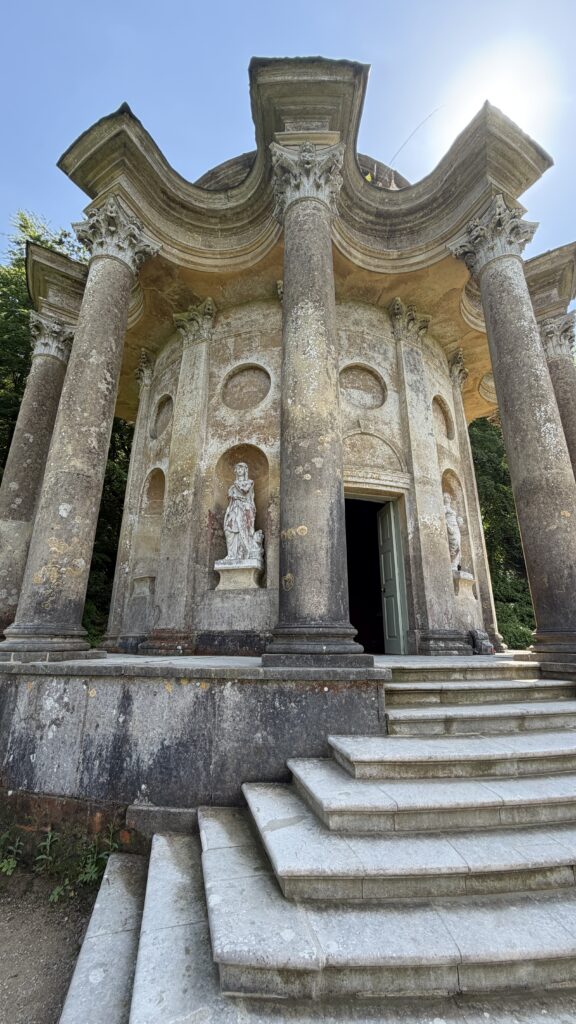
While the estate has no direct connection to Jane Austen herself, it has become a pilgrimage site for Pride and Prejudice fans because the Grecian Temple overlooking the lake served as the unforgettable setting for Mr. Darcy’s first proposal to Elizabeth Bennet in the 2005 film adaptation.
Standing on the same hillside overlooking the water was every bit as magical as I’d imagined. The sweeping landscape, classical temples, and carefully designed vistas make Stourhead one of England’s most spectacular gardens.
Even if you’ve never seen the film, the beauty of the estate alone makes it well worth the visit.
The Story Behind Stourhead’s World-Famous Garden
Unlike many formal English gardens of the eighteenth century, Stourhead was designed to tell a story.
Beginning in the 1740s, the garden was created by Henry Hoare II, often known as Henry the Magnificent. Rather than hiring a professional landscape architect, Hoare envisioned the estate himself, drawing inspiration from the paintings of Claude Lorrain, Nicolas Poussin, and Gaspard Dughet, whose idyllic landscapes celebrated harmony between nature and classical architecture. He also admired the emerging English landscape movement led by designers such as William Kent, whose work helped shift garden design away from rigid geometric layouts toward more naturalistic landscapes.
One fascinating connection to Stourhead is that Lancelot “Capability” Brown, who would later become England’s most celebrated landscape designer, worked here early in his career as the estate’s head gardener from 1741 to 1742. Although Brown is often mistakenly credited with designing Stourhead, the garden was actually Henry Hoare II’s vision. Historians believe Brown’s brief time at Stourhead influenced his understanding of naturalistic landscape design, and he would go on to shape some of Britain’s greatest country estates.
Instead of creating a formal garden, Hoare transformed a quiet valley into what he imagined as a living work of art.
At the heart of the estate is a large, man-made lake, carefully shaped to appear completely natural. Around it, visitors follow a winding path that gradually reveals a series of classical temples, bridges, grottoes, and carefully framed views. Every turn was intentionally planned, creating the feeling of walking through a landscape painting.
The garden was inspired by Virgil’s epic poem, The Aeneid, which tells the story of the Trojan hero Aeneas and his journey toward founding what would eventually become Rome. As visitors circle the lake, they symbolically follow Aeneas’s journey through moments of challenge, reflection, and triumph. The experience was designed to evoke both physical movement and emotional discovery.
Among the garden’s most celebrated features are the Pantheon, inspired by the ancient Roman temple; the Temple of Apollo, perched dramatically above the lake; the Temple of Flora, dedicated to the Roman goddess of flowers and spring; the Gothic Cottage; the Palladian Bridge; and the mysterious grotto, where visitors pass through darkness before emerging into sunlight—a symbolic representation of life’s journey from uncertainty toward enlightenment.
The carefully composed vistas reflect the ideals of the Picturesque movement, encouraging visitors to pause and appreciate each scene as though it were a framed painting. Every viewpoint was deliberately planned so that architecture, water, woodland, and open sky work together in perfect balance.
One of the most famous viewpoints is from the Grecian Temple, overlooking the lake below. This breathtaking panorama became instantly recognizable to audiences around the world when it appeared in the 2005 film adaptation of Pride and Prejudice during Mr. Darcy’s first proposal to Elizabeth Bennet.
Today, Stourhead is widely regarded as one of the finest achievements of English landscape design. More than a garden, it is a masterpiece of storytelling, where mythology, art, architecture, and nature combine to create one of England’s most unforgettable landscapes.






Inside Stourhead House
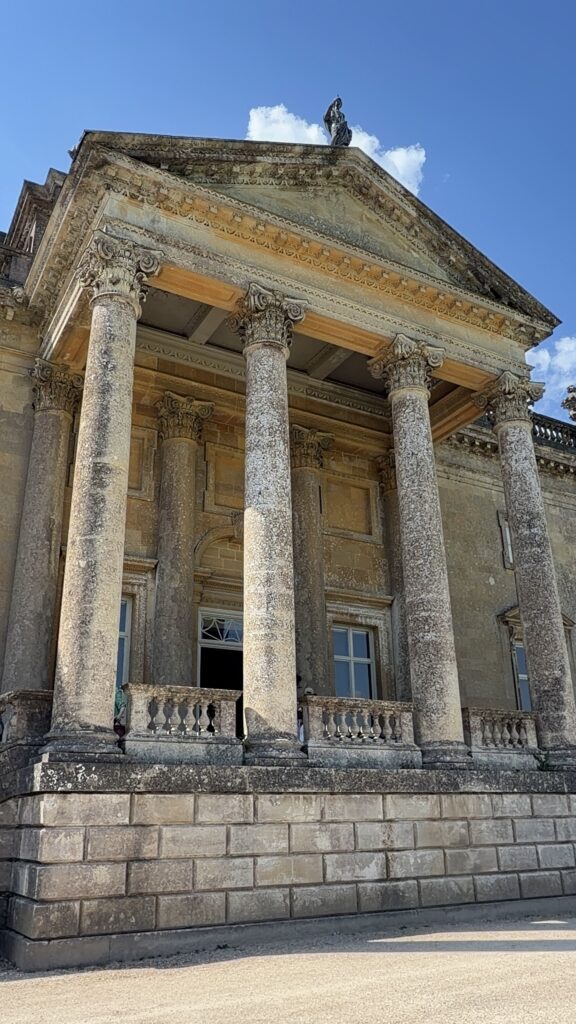
While the landscape garden is the star attraction, don’t overlook Stourhead House itself. Built in the early 1720s, it was one of the first Palladian-style country houses in England and served as the country retreat of the wealthy Hoare family, whose banking fortune helped create one of Britain’s most celebrated estates. The elegant symmetry and classical design of the house perfectly complement the idealized landscape beyond its windows.
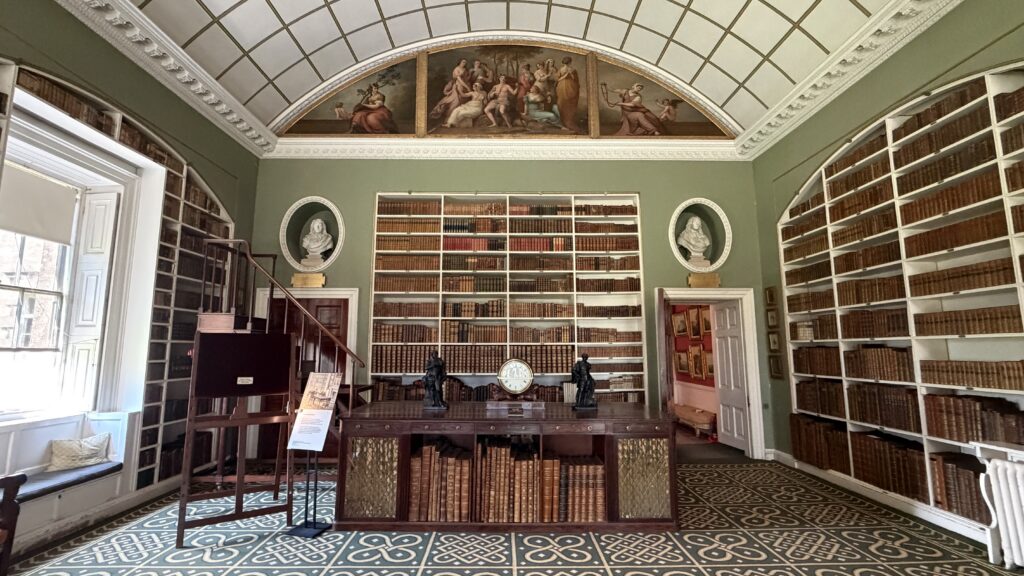
Inside, visitors can explore beautifully furnished state rooms filled with paintings, sculptures, and treasures collected during the family’s Grand Tours across Europe. One of the highlights is the Regency Library, lined with books and original Chippendale furniture, offering a glimpse into the refined tastes of the Hoare family. Throughout the house you’ll also find portraits, decorative arts, and remarkable objects collected over nearly three centuries.
The house has its own dramatic story. In 1902, a devastating fire destroyed much of the original interior. Thanks to careful restoration by the Hoare family, many of the historic collections were preserved and the house was rebuilt to reflect its original eighteenth-century appearance. Today it stands as both a beautiful home and an important part of England’s architectural heritage.
Although Stourhead became world-famous for its romantic landscape garden, taking time to tour the house adds another layer to the experience. Together, the house and gardens tell the story of a family whose vision transformed an ordinary valley into what many consider one of the finest landscape gardens in the world.



Don’t Miss
- The elegant Entrance Hall
- The Regency Library
- Original Chippendale furniture
- Paintings collected during the family’s European Grand Tours
- Beautiful views of the gardens from the house’s windows
Location
Near Mere, Wiltshire BA12 6QD, England
Website: https://www.nationaltrust.org.uk/visit/wiltshire/stourhead?utm_source=chatgpt.com
Typical Opening Hours
The gardens usually open around 9:00–10:00 a.m., with the house opening later. Hours vary seasonally.
Suggested Visit
3–4 hours
Reservations
Not usually required, but recommended during busy weekends.
Parking
Large free National Trust parking lot.
Don’t Miss
- Grecian Temple
- Palladian Bridge
- Pantheon
- Temple of Apollo
- The famous lake circuit
Travel Tips
- Wear sturdy walking shoes, as the paths include hills, gravel, and uneven terrain.
- Allow at least three to four hours to complete the full garden circuit.
- Visit on a weekday if possible to avoid larger crowds.
- Bring water, especially during warmer months.
- Download a garden map or pick one up at the entrance so you don’t miss the temples and viewpoints.
- Keep your camera ready—the scenery changes around every bend.
Walk the garden clockwise. It builds toward the most dramatic views and ends with the unforgettable panorama from the Grecian Temple—the setting for Mr. Darcy’s first proposal in the 2005 Pride and Prejudice.
Why Every Jane Austen Fan Should Make This Journey
Visiting these places reminded me that Jane Austen’s novels weren’t created in isolation.
They were shaped by real homes, real landscapes, family connections, elegant cities, and magnificent estates that still exist today.
Seeing them in person gave me a deeper appreciation not only for her writing but also for the England that inspired it. Each destination offered its own unique glimpse into the world of Jane Austen—from the quiet simplicity of Chawton to the grandeur of Chatsworth and the timeless elegance of Bath.
Whether you’re discovering Austen for the first time or have reread Pride and Prejudice more times than you can count, walking through these historic places offers something truly special.
Getting There:
- London Heathrow (LHR) if starting in southern England
- Manchester (MAN) if beginning with Chatsworth
Best by train: Bath and Chawton
Best by rental car: Chatsworth, Stourhead, and Godmersham
Recommended Trip Length
- 4 days: Bath + Chawton
- 7 days: All five locations
- 10 days: Add Winchester, Lyme Regis, and Lacock for a more complete Jane Austen itinerary
General Tips for Planning a Jane Austen Journey
- Rent a car if you want to visit multiple estates like Godmersham, Chatsworth, and Stourhead. Public transportation is excellent between larger cities, but these country houses are much easier to reach by car.
- Travel in late spring (May–June) for roses, gardens in bloom and longer daylight hours or early autumn (September) for pleasant weather, blooming gardens, and fewer crowds than the height of summer.
- Book popular attractions in advance, especially Jane Austen’s House and Chatsworth during weekends and holidays.
- Pack layers and a light rain jacket. English weather can change quickly, even in summer.
- Wear comfortable shoes every day. Most historic estates involve much more walking than visitors expect.
- Build extra time into your itinerary. The most memorable moments often happen while lingering in a garden, browsing a historic bookshop, or enjoying a leisurely afternoon tea.
- Look for seasonal events. Many historic houses host flower festivals, Christmas decorations, guided garden tours, and literary events that can make your visit even more special.

